Neuralinko Neuralinko

Why Choose a Data Center AI Server Manufacturer?

Time:2026-09-16 Author:Aria
0%

Choosing a data center ai server manufacturer is not simply a purchasing decision. It shapes performance, reliability, security, and long-term operating costs. In a modern facility, the choice appears in practical details: GPU temperatures, rack density, power distribution, network latency, and maintenance access. A supplier may advertise impressive benchmarks. Real workloads can tell a different story.

Jensen Huang, founder and CEO of NVIDIA, has said, “The data center is the computer.” This statement reflects an important industry reality. AI servers must function as part of a complete infrastructure system. An experienced manufacturer should understand GPU integration, high-speed interconnects, liquid or advanced air cooling, firmware management, and workload optimization. It should also provide clear validation records, transparent warranties, and responsive technical support. These signals help buyers distinguish engineering capability from polished marketing.

Still, no manufacturer is perfect. Unexpected thermal limits may appear after deployment. Software updates can introduce compatibility problems. Energy costs may challenge an otherwise excellent design. That is why careful evaluation matters. Buyers should request workload-based testing, service-level details, component traceability, and realistic delivery schedules. A trustworthy data center ai server manufacturer will discuss limitations openly, not only performance peaks. The strongest partnership combines proven engineering with honest review. Speed matters. So does accountability. Choosing well means examining what happens after installation, when the servers are busy, the room is hot, and every hour of downtime becomes expensive.
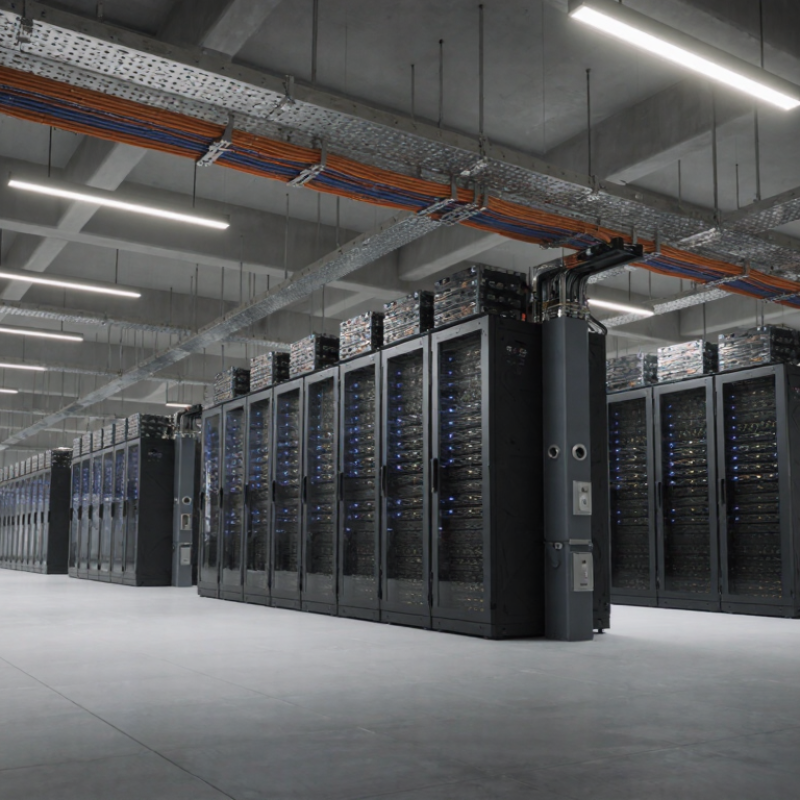
Why Choose a Data Center AI Server Manufacturer?

AI Infrastructure Demand: IDC Forecasts $280 Billion in Spending by 2028

Why Choose a Data Center AI Server Manufacturer?

AI Infrastructure Demand: IDC Forecasts $280 Billion in Spending by 2028

IDC forecasts $280 billion in AI infrastructure spending by 2028. This growth is reshaping how organizations plan computing capacity, cooling, networking, and security. A specialized data center AI server manufacturer can align these systems with demanding workloads. Training models need dense GPU power. Inference environments need predictable response times and efficient energy use. Small design choices become expensive at scale.

Experienced manufacturers offer more than hardware. They can validate thermal layouts, rack density, firmware stability, and long-term maintenance plans. Reliable suppliers also document test procedures and provide measurable performance data. That evidence supports better purchasing decisions. It also helps technical teams avoid impressive specifications that fail under continuous workloads. A perfect forecast does not exist. Actual demand may change faster than facility upgrades.

Tips: Ask for workload-based benchmarks, not generic performance claims. Check power draw during sustained operation. Request clear service procedures and replacement timelines. Confirm compatibility with existing networks and cooling systems. Leave room for growth, but avoid buying capacity that will remain idle. This is where many plans become too optimistic. A careful manufacturer will identify those gaps before deployment, even when the answer delays a sale.

GPU, Networking, and Cooling Expertise Required for AI Server Deployment

Choosing a data center AI server manufacturer requires more than comparing processor counts. AI deployment combines GPU performance, network design, and thermal control. A GPU may deliver impressive calculations, yet poor airflow can reduce its sustained output. Small configuration errors become expensive.

A capable manufacturer should understand GPU memory, power limits, firmware behavior, and rack density. Its engineers should test workloads under continuous stress, not only during short demonstrations. Networking matters just as much. High-speed adapters, suitable switch topology, and balanced cable paths help prevent communication delays between servers. One overlooked cable route can disrupt an otherwise strong cluster. That happens more often than expected.

Cooling expertise is equally important. Dense GPU racks produce intense heat, sometimes beyond traditional air-cooling assumptions. Manufacturers should map inlet temperatures, pressure zones, fan curves, and service clearances before installation. Liquid cooling may improve efficiency, but it also requires careful leak detection, fluid management, and maintenance planning. A first thermal estimate can be wrong. Good engineers revise it after measuring real rack conditions. Reliable suppliers provide burn-in records, wiring diagrams, thermal test results, and clear replacement procedures. During acceptance testing, teams should inspect GPU stability, network latency, power draw, and alarm responses together. This practical evidence reveals weaknesses that polished specifications may hide.

Power Efficiency Benchmark: Uptime Institute Reports an Average PUE of 1.58

Why Choose a Data Center AI Server Manufacturer?

Uptime Institute reports an average Power Usage Effectiveness (PUE) of 1.58. This means a facility uses 1.58 units of energy for every unit powering computing equipment. The figure gives buyers a useful reference point. However, it is not a performance guarantee.

AI servers create unusual thermal demands. High-density accelerators can place intense loads on a single rack. A capable manufacturer should test airflow, power delivery, and cooling under sustained workloads. Factory validation should include temperature variation, fan response, and peak electrical demand. These details matter when servers operate continuously in a restricted room.

Small design choices can reduce waste. Efficient power supplies, balanced rack layouts, and accurate temperature sensors all help. Liquid cooling may improve results, but it also adds pumps, maintenance needs, and possible failure points. The answer is not always more technology.

PUE should be measured at the facility level, not guessed from a product sheet. Ask how the manufacturer supports monitoring, firmware updates, component replacement, and energy reporting. Reliable suppliers provide test methods and realistic operating limits. That evidence is more valuable than a polished efficiency claim.

A PUE of 1.58 is a benchmark, not a finish line. Workload patterns change. Weather changes. Operator habits change too. My own view is less tidy: the most efficient server can still waste energy inside a poorly managed data center. Choose a manufacturer that discusses these limitations openly. That honesty often signals stronger engineering practice.

Why Choose a Data Center AI Server Manufacturer? - Power Efficiency Benchmark: Uptime Institute Reports an Average PUE of 1.58

Performance Dimension Benchmark / Calculation What It Means for AI Server Deployment Data Basis
Average data center PUE 1.58 For every 1.00 kWh used by IT equipment, approximately 0.58 kWh is used for cooling, power distribution, lighting, and other overhead. Reported industry average benchmark
PUE formula Total facility energy ÷ IT equipment energy A lower PUE indicates that a greater share of consumed electricity reaches servers, storage, and networking equipment. Standard data center efficiency definition
Energy required for 1 MWh of IT load 1.58 MWh total facility energy The facility overhead associated with 1 MWh of AI computing is 0.58 MWh at the reported average PUE. Derived from PUE 1.58
Facility overhead share at PUE 1.58 36.7% of total facility energy Efficient server design should be evaluated together with cooling, power conversion, airflow, and rack-density requirements. Calculated as (1.58 − 1) ÷ 1.58
Illustrative lower-PUE scenario PUE 1.30 requires 1.30 MWh per 1 MWh of IT load Compared with PUE 1.58, this scenario uses 0.28 MWh less total facility energy for every 1 MWh of IT load. Mathematical comparison; not a company result
AI server power-density consideration Higher rack power increases cooling and power-distribution requirements A qualified manufacturer should provide thermal validation, power budgeting, airflow planning, and sustained-load testing for the intended configuration. Engineering implication of high-density computing
Procurement takeaway Evaluate server efficiency and facility efficiency together Ask for measured power consumption, workload conditions, cooling assumptions, reliability targets, and integration test results rather than relying only on peak hardware specifications. Practical evaluation framework

Note: PUE values are facility-level efficiency metrics. The 1.58 figure is an industry-reported average benchmark; illustrative comparisons are calculated values and do not represent any specific organization or brand.

Lifecycle Economics: Manufacturer Support Reduces AI Cluster Downtime Risks

Why Choose a Data Center AI Server Manufacturer?

Lifecycle Economics: Manufacturer Support Reduces AI Cluster Downtime Risks

Choosing a data center AI server manufacturer affects more than purchase price. It shapes how reliably an AI cluster performs over several years. In production, one failed accelerator can interrupt training, testing, and scheduled inference. A four-node job may sit idle while engineers search for compatible parts. Small delays become expensive.

Lifecycle economics makes manufacturer support easier to measure. A dependable manufacturer can provide validated replacement components, firmware guidance, and remote diagnostic assistance. These services reduce trial-and-error repairs during critical incidents. A clear escalation process also helps teams identify whether the fault involves power, cooling, memory, or software integration. That response matters.

Support planning should include spare-part availability, technician coverage, repair targets, and upgrade compatibility. Ask how service records are documented. Ask whether replacement parts match the original thermal and power requirements. A cheaper server may create higher labor costs when engineers repeatedly isolate preventable faults. One planning mistake is assuming every technician can repair specialized AI hardware. That assumption is too optimistic. Effective support reduces unnecessary hardware swaps and protects valuable engineering time. It also helps facilities schedule maintenance before a minor temperature warning becomes an unplanned shutdown. Cost is not only hardware.

Evaluation Criteria: Certifications, Supply Capacity, Security, and Service Coverage

Why Choose a Data Center AI Server Manufacturer?

Certifications, Supply Capacity, Security, and Service Coverage

A qualified AI server manufacturer should provide current, verifiable certifications. Check ISO 9001 for quality systems and ISO 27001 for information security. Regional compliance may also matter for data center operations. Ask for certificate numbers, issuing bodies, and renewal dates. Do not accept a logo alone.

Supply capacity is equally important during rapid deployments. Request production lead times, tested configuration lists, and spare-part availability. A reliable supplier should explain burn-in testing, rack integration, and delivery checkpoints. Security reviews should cover secure boot, signed firmware, TPM support, and controlled software updates. Clear vulnerability handling matters. Small gaps can become expensive.

Tips: Ask for a sample acceptance report, a written escalation path, and named service regions. Confirm response times for hardware failure and remote diagnostics. Check whether local engineers can replace a failed power supply within your required window. Read the service agreement carefully. Marketing language can hide limits. I would also test one pilot server before a full purchase. That extra step may reveal noisy fans, unclear logs, or weak documentation. A perfect evaluation is unlikely, but documented evidence makes decisions safer.

FAQS

What should you evaluate when choosing an AI server manufacturer?

Evaluate GPU performance, networking, cooling, firmware, power limits, and long-term support. Processor counts alone can mislead.

Why does GPU memory matter in AI server deployment?

GPU memory affects workload capacity and stability. A strong processor may still struggle with oversized models or poorly matched workloads.

How can poor airflow reduce server performance?

Poor airflow raises inlet temperatures and may reduce sustained GPU output. Short demonstrations can hide this weakness.

What networking details should a manufacturer provide?

Ask about high-speed adapters, switch topology, cable paths, and network latency. One overlooked route can delay an entire cluster.

When is liquid cooling worth considering?

Liquid cooling can improve efficiency in dense GPU racks. It requires leak detection, fluid management, and maintenance planning.

What thermal information should be checked before installation?

Review inlet temperatures, pressure zones, fan curves, and service clearances. A first estimate may be wrong. Measure real conditions.

What should acceptance testing include?

Test GPU stability, network latency, power draw, and alarm responses together. This reveals weaknesses that polished specifications may hide.

How does manufacturer support reduce operational downtime?

Reliable support provides validated parts, firmware guidance, diagnostics, and clear escalation. Small delays can leave a training job idle.

What lifecycle support questions should buyers ask?

Ask about spare parts, technician coverage, repair targets, service records, and upgrade compatibility. Not every technician can repair specialized hardware.

Why is the cheapest server not always the lowest-cost choice?

Repeated troubleshooting, labor, and incompatible replacements can increase total costs. Hardware price is only one part of ownership.

Conclusion

Choosing a data center ai server manufacturer is a strategic decision for organizations preparing for rapid AI growth. Industry forecasts indicate that global AI infrastructure spending could reach $280 billion by 2028, increasing demand for reliable servers, high-speed networking, advanced GPUs, and efficient cooling systems. Successful deployment requires more than hardware; it depends on coordinated infrastructure design, power management, and operational planning. With average data center PUE reported at 1.58, manufacturers that prioritize energy efficiency can help reduce operating costs while supporting sustainable expansion.

Long-term lifecycle value is equally important. Strong manufacturer support can minimize downtime risks through dependable maintenance, replacement planning, firmware updates, and technical assistance throughout the AI cluster’s service life. When evaluating potential partners, organizations should examine relevant certifications, production capacity, supply continuity, cybersecurity safeguards, warranty terms, and global service coverage. The right manufacturer should provide scalable solutions that balance performance, efficiency, security, and availability, enabling businesses to expand AI capabilities with greater confidence and predictable total ownership costs.

Aria

Aria

Aria is a dedicated marketing professional with a deep passion for innovative strategies and a keen understanding of our company's product offerings. With a wealth of experience in the industry, Aria excels at crafting engaging content that highlights the unique features and benefits of our......