Neuralinko
A cloud ai server manufacturer designs and builds the infrastructure behind modern artificial intelligence services. Its products may include GPU servers, storage systems, networking equipment, and integrated cooling solutions. These machines often operate inside data centers, where thousands of processors handle training, inference, and data-intensive workloads. A typical rack may contain high-memory accelerators, redundant power supplies, and high-speed connections between servers.
The manufacturer’s role extends beyond assembling hardware. It must validate thermal performance, firmware stability, workload compatibility, and long-term reliability. Experienced teams test servers under sustained computational pressure, not only during short demonstrations. They may examine GPU utilization, memory bandwidth, network latency, power consumption, and recovery behavior after component failure. Independent benchmarks can help, but benchmark results rarely describe every customer environment. That limitation deserves attention.
Choosing a supplier also requires practical evidence. Buyers should review warranty terms, technical documentation, replacement procedures, security controls, and support response times. A dependable manufacturer explains where components come from and how systems are maintained. It should also provide clear guidance for scaling from a small cluster to a larger cloud platform. Strong engineering matters. Clear communication matters too.
The market is changing quickly. New accelerator architectures, liquid cooling designs, and software frameworks can alter purchasing decisions within months. Some manufacturers offer impressive specifications but limited deployment experience. Others provide mature support while using less fashionable hardware. Careful evaluation remains essential. A cloud ai server manufacturer should be judged by measurable performance, operational experience, transparent service commitments, and its ability to solve problems after installation. That is where reliability becomes real.
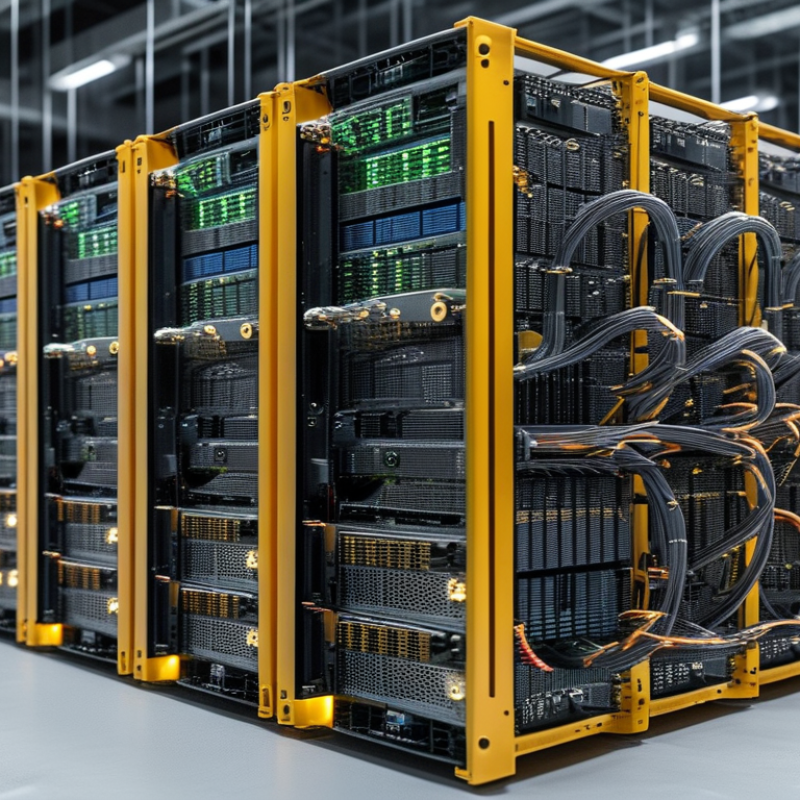
A cloud AI server manufacturer designs, builds, and validates computing systems for cloud-based artificial intelligence workloads. Its role extends beyond assembling servers. It selects accelerators, processors, memory, networking components, storage, and cooling systems. These machines must train models quickly and serve predictions reliably.
They also require firmware tuning, rack-level testing, remote monitoring, and predictable maintenance procedures.
In practical deployments, engineers check airflow, power distribution, cable paths, and failure recovery before installation.
Small design errors can become expensive across thousands of servers. The definition is not perfectly clean. Some manufacturers build complete systems, while others integrate certified components from multiple suppliers.
Demand for this role is growing with AI investment.
The Stanford AI Index 2024 reported 25.2 billion dollars in global private generative AI investment during 2023. That investment increases pressure for efficient infrastructure, not merely faster hardware.
1,000+
The International Energy Agency’s Electricity 2024 report projected that data center electricity use could exceed 1,000 terawatt-hours by 2026.
Therefore, a capable manufacturer must address performance, energy consumption, heat removal, and operational reliability together.
Liquid cooling may improve density, but it also introduces installation complexity and new maintenance risks. The label can still mislead. A fast server is not automatically a dependable cloud platform.
Buyers should examine benchmark methods, service response times, lifecycle support, security controls, and real-world power measurements before selecting a manufacturing partner.
A cloud AI server manufacturer designs and assembles the hardware that supports remote machine learning workloads. Its work extends beyond placing processors in a rack. A reliable system must balance computing speed, energy use, cooling, network traffic, and maintenance access. The real test appears during sustained workloads, not during a short laboratory demonstration.
The central component is an AI accelerator, such as a graphics processor or specialized inference chip. It handles large matrix calculations more efficiently than a general-purpose processor. The central processing unit manages system tasks, while high-speed memory feeds data to the accelerator. Storage devices hold training datasets, model files, and logs. Fast networking connects multiple servers, reducing delays when models share data across machines. One slow connection can weaken an otherwise powerful cluster.
Power delivery and cooling deserve equal attention. Dense racks can produce intense heat within minutes, so airflow design, liquid cooling, temperature sensors, and backup power become practical necessities. Firmware, virtualization tools, monitoring software, and access controls help operators manage the system safely. In field evaluations, specifications sometimes look impressive but hide poor performance under continuous load. That is a useful warning. Noise, cable placement, recovery time, and service procedures also affect reliability. Some designs still treat these details as secondary, although operators notice them every day.
Core cloud AI server systems combine accelerators, memory, high-speed interconnects, networking, storage, power delivery, and cooling. The chart compares the theoretical data throughput of commonly used server interfaces and links.
Values are theoretical maximum one-way rates: DDR5-5600 memory bandwidth per 64-bit channel, PCIe 5.0 x16 bandwidth, 400 GbE line rate, and PCIe 4.0 x4 NVMe bandwidth. Actual application performance depends on hardware design, workload, protocol overhead, and system configuration.
A cloud AI server manufacturer designs and builds computing systems for demanding artificial intelligence workloads. The work begins with workload analysis, not a standard parts list. Engineers estimate model size, training duration, memory needs, network traffic, and power limits. These details shape the entire platform.
A typical design combines AI accelerators, general-purpose processors, high-speed memory, storage, and low-latency interconnects. Thermal engineering is equally important. Dense racks produce intense heat, so manufacturers may use carefully directed airflow or liquid cooling plates. Power delivery must remain stable during sudden workload changes. Even a small connector problem can reduce system reliability.
Manufacturing then turns the design into a controlled process. Technicians inspect circuit boards, install processors, route cables, and verify cooling contact. Firmware is configured before each server enters testing. Automated tools check performance, temperature, power draw, and network latency. Engineers also run extended workloads to reveal failures that short tests may miss.
Details matter most.
A reliable manufacturer records component batches, test results, and repair history. This supports traceability and more honest maintenance decisions. However, no design is perfect. A server may pass laboratory tests yet behave differently in a crowded data center. Engineers must review field evidence, revise assumptions, and sometimes redesign a seemingly successful system. Manufacturing quality is not only about speed. It depends on repeatable processes, measurable tests, and the willingness to question convenient answers.
A cloud AI server manufacturer designs and builds computing systems for artificial intelligence workloads. These systems combine high-performance processors, accelerators, memory, storage, and network equipment. Their work extends beyond assembling hardware. They help organizations select suitable configurations for training, inference, data analysis, and virtual machine hosting.
Practical service begins with workload assessment. Engineers review model size, data volume, response targets, and power limits. They may recommend liquid cooling, dense rack layouts, or flexible expansion paths. Installation support can include rack integration, firmware checks, cable planning, and network validation. Small details matter. A loose connection can reduce availability.
Manufacturers also provide software compatibility guidance. They test drivers, operating environments, monitoring tools, and orchestration systems before deployment. Some offer remote diagnostics, replacement planning, and technical training for internal teams. Experienced support staff can examine temperature graphs, utilization levels, and error logs instead of guessing from one warning message.
No configuration fits every organization. A system built for model training may perform poorly for low-latency inference. That distinction is sometimes missed during rushed purchasing decisions. Reliable manufacturers document performance conditions, service limits, and maintenance duties clearly. They should explain what has been tested and what remains uncertain. Independent validation is still valuable. Even a well-designed server can need adjustment after real workloads arrive.
A cloud AI server manufacturer designs and builds systems for training, inference, and large-scale data processing. Evaluation should begin with workload fit, not attractive specifications. Ask for measured performance under your model, batch size, and network pattern. Reported peak performance can hide thermal throttling or inefficient software. Demand evidence.
Energy efficiency deserves equal attention. The International Energy Agency’s Electricity 2024 report estimates that data center electricity use could exceed 945 TWh annually by 2030. A qualified manufacturer should provide power data at idle, normal load, and sustained peak load. Check cooling requirements, rack density, liquid-cooling support, and power redundancy. Numbers can mislead.
Reliability is more than component quality. The Uptime Institute’s Global Data Center Survey 2024 found that 53% of reported outages caused at least some financial damage, while serious incidents still occur. Review failure-rate testing, firmware controls, spare-part locations, and replacement procedures. Ask whether technicians can respond within your operating region. Also inspect security documentation, supply-chain traceability, and compliance records. A live pilot with monitoring is stronger than a polished presentation.
A practical scorecard should compare performance per watt, total cost, service response, upgrade paths, and software compatibility. No scorecard is perfect. Cloud workloads change quickly, so today’s efficient server may become restrictive next year. That uncomfortable possibility belongs in the evaluation.
I server manufacturer do?
Design begins with the workload, not a fixed parts list. Engineers study model size, training time, memory needs, network traffic, and power limits. These factors shape the complete platform. A training system may not suit low-latency prediction.
Important parts include AI accelerators, general processors, high-speed memory, storage, and low-latency interconnects. Stable power delivery also matters during sudden workload changes. One weak connector can reduce reliability. Small details matter.
Dense racks generate substantial heat during intensive workloads. Manufacturers may use directed airflow or liquid cooling plates. Liquid cooling can support higher density, but installation becomes more complicated. Maintenance risks may also increase. It is not automatically better.
Automated tests measure performance, temperature, power draw, and network latency. Technicians also verify processor installation, cable routing, firmware, and cooling contact. Extended workloads can expose failures that short tests miss. Laboratory results are not perfect.
Support may include workload assessment, rack integration, firmware checks, cable planning, and network validation. Manufacturers can also help test drivers, operating environments, monitoring tools, and orchestration systems. Some provide remote diagnostics and replacement planning. Training may support internal teams.
Buyers should request benchmark conditions, power measurements, service response times, and lifecycle support details. They should review security controls and maintenance responsibilities. Test results should include clear limits. Uncertainty should be visible.
Yes. A server may behave differently in a crowded data center. Heat, workload changes, cable paths, and network traffic can alter results. Engineers should review field evidence and revise assumptions. A successful test is not a guarantee. That deserves reflection.
A cloud ai server manufacturer designs, builds, and supports high-performance computing systems that deliver artificial intelligence capabilities through cloud platforms. Its role includes integrating processors, accelerators, memory, storage, networking, power, and cooling into reliable server architectures optimized for demanding AI workloads such as model training, inference, and data analysis. These systems are engineered for scalability, energy efficiency, security, and continuous availability.
Beyond hardware production, a cloud ai server manufacturer may provide system configuration, software compatibility, infrastructure integration, technical support, maintenance, and performance optimization. When evaluating a manufacturer, customers should consider computing performance, expandability, reliability, security features, energy consumption, manufacturing quality, customization options, delivery capacity, and long-term service support. A capable partner should also demonstrate clear testing standards and a strong understanding of evolving AI infrastructure requirements.
