 Neuralinko
An ai inference server manufacturer builds and delivers the systems that run trained artificial intelligence models in real time. These companies may design complete servers, integrate GPUs, develop cooling systems, or combine hardware with optimized inference software. Their products support chatbots, medical imaging, recommendation engines, industrial inspection, and other workloads that require fast responses.
The distinction matters. A chip company may produce the accelerator, while an ai inference server manufacturer assembles the wider platform. That platform can include CPUs, GPUs, memory, networking cards, storage, power supplies, and monitoring tools. It must move data quickly without wasting energy. In a busy data center, poor airflow can reduce performance within minutes. A reliable manufacturer therefore tests thermal behavior, workload stability, firmware, and long-term maintenance.
Jensen Huang, NVIDIA’s founder and CEO, has said, “The future of computing is accelerated computing.” His statement helps explain why inference servers increasingly use specialized accelerators. Yet acceleration alone does not guarantee a useful system. Latency, model compatibility, security controls, serviceability, and total operating cost also shape purchasing decisions.
A serious evaluation needs evidence. Buyers should examine independent benchmarks, warranty terms, support response times, and real deployment references. Marketing figures can look impressive. They may not reflect a customer’s model or traffic pattern. I have found that this is where the definition becomes less tidy: some vendors manufacture hardware, some integrate it, and others mainly brand systems made elsewhere. The name matters less than verified engineering responsibility.
What Is an AI Inference Server Manufacturer?
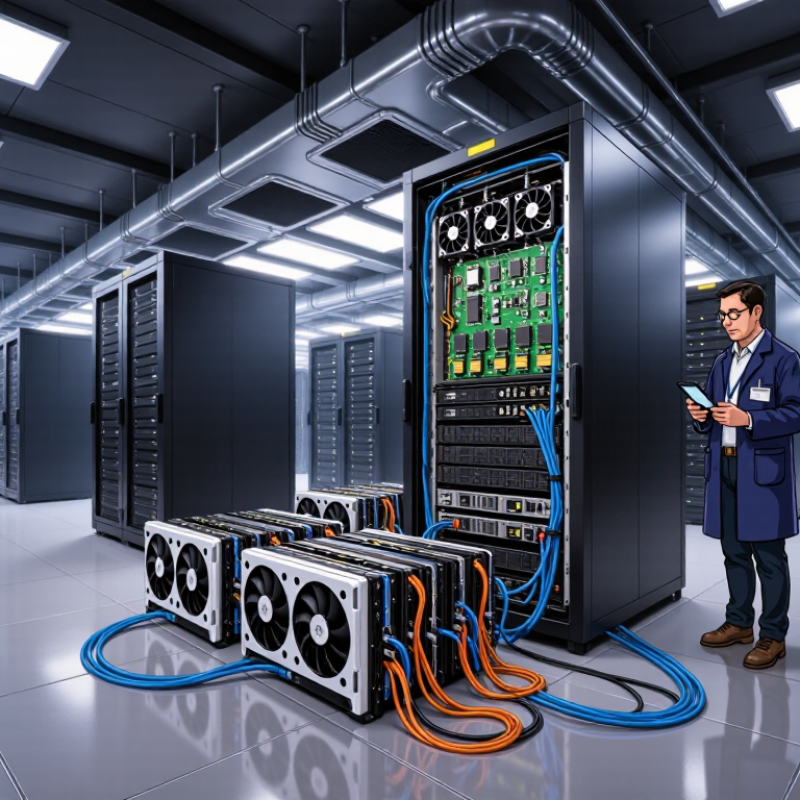
An AI inference server manufacturer builds systems that run trained models for real-world applications. The work begins with selecting processors, accelerators, memory, storage, and network components. Each part must support fast responses under steady workloads. A server may process camera frames, voice requests, or customer records within seconds. Small design choices matter. Poor airflow can reduce performance and shorten component life.
What an AI Inference Server Manufacturer Builds and Delivers
A reliable manufacturer delivers more than assembled hardware. It provides tested server configurations, firmware settings, operating system images, and deployment documentation. Engineers may measure response time, power use, heat levels, and throughput before shipment. They also verify compatibility with common model formats and container environments. These tests create useful evidence, not vague performance promises. Still, testing is never perfect. Real customer traffic can behave differently.
Delivery often includes rack integration, remote management tools, security controls, and technical support. Clear documentation helps administrators replace parts and monitor system health. Experienced teams also plan for expansion, because model sizes and user demand can change quickly. A well-designed server should remain serviceable after installation. That requires accessible components, predictable maintenance, and honest capacity estimates. Overstating performance may win an order, but it damages trust later. Reliable manufacturers keep reviewing their designs, learning from failed deployments, and improving the next configuration.
| Delivery Area | What the Manufacturer Builds | Typical Technical Content | Validation or Acceptance Evidence | Customer Outcome |
|---|---|---|---|---|
| Inference server chassis | Rack-mounted computing systems designed to run trained machine-learning models in production. | CPU, accelerator slots, memory, storage bays, power supplies, fans, rack-unit height, and serviceable components. | Component compatibility checks, thermal testing, power testing, burn-in testing, and system diagnostics. | A deployable physical platform for online or batch AI inference. |
| AI accelerators | Server configurations that integrate GPUs, dedicated inference accelerators, or other supported processing devices. | Accelerator quantity, device memory, supported numeric formats such as FP32, FP16, BF16, or INT8, and interconnect options. | Model compatibility tests, device health checks, throughput tests, and latency measurements under defined workloads. | Hardware matched to the model size, concurrency level, and response-time requirement. |
| System memory and storage | Memory and storage subsystems for model files, runtime libraries, logs, operating systems, and application data. | ECC memory where supported, NVMe or other storage media, storage redundancy options, and capacity planning. | Memory diagnostics, storage health monitoring, read/write testing, and recovery procedures. | Reliable model loading, caching, logging, and local data handling. |
| Inference software stack | Preinstalled or validated operating-system images, drivers, runtimes, APIs, containers, and model-serving tools. | Driver versions, container support, REST or gRPC endpoints, batching, model loading, concurrency controls, and health checks. | Reproducible deployment tests, API tests, model-load tests, and compatibility records. | Faster deployment with fewer integration issues between hardware and software. |
| Networking | Network interfaces and connectivity options for client requests, storage access, cluster communication, and administration. | Ethernet interfaces, bandwidth options, PCIe connectivity, network redundancy, and remote-management ports. | Link validation, packet-loss testing, bandwidth testing, failover checks, and latency measurements. | Stable communication between users, applications, models, storage, and monitoring systems. |
| Power and thermal design | Power-delivery and cooling configurations sized for sustained inference workloads. | Power-supply capacity, airflow direction, fan control, inlet-temperature limits, rack power requirements, and acoustic considerations. | Temperature monitoring, sustained-load testing, fan verification, and power-consumption measurements. | Predictable operation and reduced risk of thermal throttling or power-related interruptions. |
| Management and security | Firmware controls, remote management, access controls, secure-boot options, and system-monitoring functions. | Out-of-band management, event logs, firmware updates, role-based access, hardware alerts, and audit support. | Management-interface tests, permission checks, firmware verification, and alert validation. | Improved operational visibility, maintenance efficiency, and infrastructure control. |
| Performance benchmarking | Workload-specific performance profiles for selected models and deployment conditions. | Requests per second, first-token latency, total response latency, batch size, concurrency, model precision, and power use. | Documented test configuration, repeatable workload, percentile latency, throughput, and utilization results. | A measurable basis for capacity planning and total-cost evaluation. |
| Deployment and integration | Configured systems, installation documentation, rack-integration guidance, and tested connections to the customer environment. | Network configuration, image deployment, model import, API setup, orchestration integration, and monitoring integration. | Site-acceptance testing, configuration review, rollback procedures, and operational handover. | A production-ready inference environment rather than disconnected hardware components. |
| Support and lifecycle services | Warranty coverage, replacement procedures, firmware maintenance, technical documentation, and optional on-site services. | Support scope, response process, spare-part availability, update policy, service documentation, and end-of-life planning. | Service-level records, issue-tracking procedures, maintenance schedules, and replacement-part documentation. | Longer service continuity and more predictable infrastructure maintenance. |
It builds systems that run trained models in real-world applications. These systems may process camera frames, voice requests, or customer records.
Common components include processors, accelerators, memory, storage, and network hardware. Airflow also matters because heat can reduce performance and component life.
Delivery may include tested configurations, firmware settings, operating system images, and deployment documentation. Rack integration, remote management, monitoring, and technical support can also help.
Review TOPS, TFLOPS, tokens per second, and P95 latency. No single metric predicts the complete user experience.
P95 latency shows the delay affecting 95 percent of requests. A server may generate 100 tokens per second yet feel slow after a long initial delay.
Ask for the model version, input length, output length, precision, concurrency, and power data. Reproducible tests are more useful than attractive peak scores.
No. Fast links can still suffer from weak cables, poor switching, packet loss, or uneven traffic.A rack can expose problems quickly.
It allows about 52.6 minutes of annual downtime. Redundant power, replaceable parts, monitoring, and tested failover procedures support this target.
Include electricity, cooling, maintenance, upgrades, deployment labor, and support. Compare cost per completed inference, not only purchase price.
Not completely. Real traffic includes unexpected input sizes, recovery events, thermal changes, and uneven demand.A clean score can mislead.
Accessible components, clear replacement instructions, predictable maintenance, and health monitoring improve serviceability. Capacity estimates should remain honest, even when demand changes quickly.
An ai inference server manufacturer designs and delivers purpose-built systems that convert trained artificial intelligence models into fast, reliable responses for real-world applications. These servers combine GPUs and CPUs with high-bandwidth memory, NVLink-style interconnects, and PCIe 5.0 expansion to move data efficiently and support demanding workloads. Their design must balance computational density, thermal management, memory capacity, and flexible deployment requirements.
Evaluating an inference server involves more than peak performance. TOPS and TFLOPS indicate computational capability, while tokens per second measures practical language-model output and P95 latency reflects the experience of nearly all users under load. High-speed 400GbE networking can support distributed inference, while 99.99% uptime requires dependable components, monitoring, redundancy, and maintenance planning. Power consumption and total cost of ownership are equally important, helping organizations select infrastructure that delivers consistent performance without creating unnecessary operational expense.
