Neuralinko
Choosing a deep learning server manufacturer is no longer a simple purchasing exercise. It is an infrastructure decision affecting model speed, energy use, data security, and research continuity. The Stanford AI Index 2024 reports that training compute for notable AI models has doubled approximately every 3.4 months since 2010. Hardware decisions therefore become outdated quickly. A server that looks affordable today may struggle with tomorrow’s larger models.
Performance figures need careful interpretation. A credible deep learning server manufacturer should explain GPU type, memory capacity, interconnect bandwidth, storage design, and supported frameworks. Ask for reproducible benchmarks, not attractive peak numbers alone. A practical test might include loading a large dataset, running mixed-precision training, and monitoring GPU utilization. Small details matter. Poor airflow can turn an impressive rack into a noisy, throttled machine.
Reliability deserves equal attention. Uptime Institute’s 2024 outage analysis reported that 54% of surveyed data-center outages caused more than $100,000 in direct and indirect costs. Vendor support, spare-parts availability, firmware control, and warranty response times can protect against such losses. Yet no manufacturer is perfect. Some suppliers offer excellent acceleration but weak documentation. Others provide strong support but limited customization. Buyers should examine customer references, service-level commitments, power requirements, and total ownership costs. The best choice is rarely the server with the highest advertised benchmark. It is the partner that can prove stable performance, transparent engineering, and dependable support in the buyer’s actual operating environment.
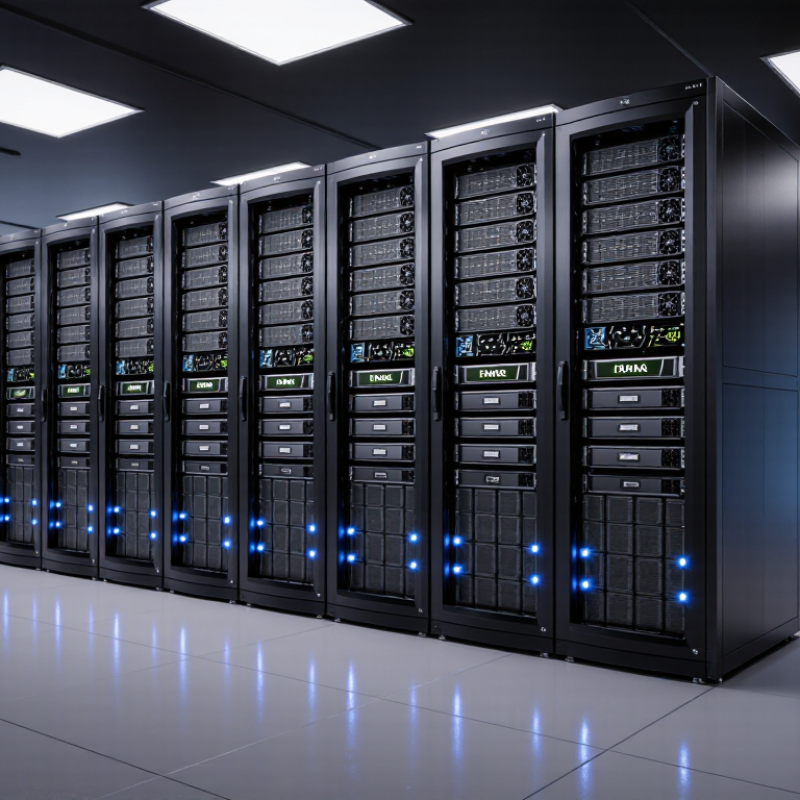
How to Choose a Deep Learning Server Manufacturer?
Define your deep learning server requirements before comparing manufacturers. A model for image classification may need one powerful GPU, while large language model training can require several GPUs with high memory capacity. Write down your workload, dataset size, framework, and expected training time. Include inference needs if the server will support daily production requests.
Specify practical hardware details. Record the required GPU memory, CPU cores, system RAM, storage capacity, and network speed. For example, a 20-terabyte dataset may need fast local storage, not only cheap external disks. Check power consumption and cooling requirements, especially for a server room with limited airflow. I once underestimated heat output during sustained training. That mistake increased operating costs and reduced performance.
Tips: Request benchmark results using workloads similar to yours. Ask about GPU compatibility, future upgrades, technical support, warranty response, and replacement parts. Confirm whether the manufacturer provides tested configurations or only assembled components. Measure rack space and electrical capacity before ordering. A lower purchase price can become expensive when storage, cooling, and maintenance are added later. Document every requirement, even uncertain ones, and review them with an experienced system engineer.
How to Choose a Deep Learning Server Manufacturer?
Compare GPU, CPU, Memory, and Storage Configurations
Start with the workload, not the server chassis. GPU memory often limits model size and batch size. For vision or language training, compare memory capacity, interconnect speed, and cooling design. MLCommons MLPerf Training results show that system architecture affects training time, not only accelerator count. A server with eight GPUs may still underperform when data movement is poorly designed. CPU performance matters during preprocessing, simulation, and frequent data loading. Select enough cores and high memory bandwidth to keep GPUs active.
Memory deserves careful testing. A practical starting point is two to four times the total GPU memory for system RAM, but this is not universal. Storage should combine fast local NVMe drives with reliable shared capacity. Slow datasets can leave expensive GPUs waiting. The Stanford AI Index 2024 reports that advanced model training demands continue to rise sharply, making expansion planning essential. However, buying the largest system immediately can waste capital. I have seen utilization fall when teams ignored data pipelines and software compatibility.
Tips: Ask manufacturers for reproducible benchmark logs, power measurements, noise levels, and thermal results. Request a workload trial using your own dataset. Check warranty response times and spare-part policies. The IEA’s Electricity 2024 report expects data-centre electricity demand to more than double by 2026. Efficiency is now a configuration issue, not a minor detail. My imperfect rule: measure twice, then buy less than your ambition.
Choosing a deep learning server manufacturer requires more than comparing processor counts. Quality appears in thermal design, firmware stability, power protection, and service response. Uptime Institute’s 2023 Global Data Center Survey reported that more than two-thirds of operators experienced an outage within three years. Ask manufacturers for failure-rate data, repair times, burn-in procedures, and clear warranty terms. A polished chassis can still hide weak support.
Customization should match your workload, not a generic product sheet. Confirm GPU spacing, rack depth, PCIe lane allocation, memory capacity, storage redundancy, and cooling performance under sustained training loads. The 2024 AI Index Report notes that notable AI model training compute has doubled roughly every 3.4 months since 2012. That pace makes modular upgrades valuable. Liquid cooling may help dense systems, but it also adds maintenance points. I would not accept impressive benchmark results without temperature and power records.
Compatibility is equally practical. Test the server with your operating system, drivers, container runtime, network fabric, monitoring tools, and job scheduler. Verify firmware update procedures and rollback options. The server should support standard interfaces and documented APIs. Compatibility failures are often quiet. A training job may run, yet lose efficiency through poor communication between accelerators. Require a pilot test using your actual models and datasets. Leave room for disagreement; vendor test conditions rarely resemble a busy production rack.
Choosing a deep learning server manufacturer requires more than comparing processor counts. Performance should match your workloads, such as image training, language models, or real-time inference. Check GPU compatibility, memory bandwidth, storage speed, and network latency. A server that trains quickly may still waste time during data transfers.
In practical testing, I watch temperature readings, fan noise, and job stability during several days of continuous use. Short benchmarks can look impressive. They can also hide throttling, driver conflicts, or unstable power delivery. Reliability depends on component quality, firmware control, spare-part availability, and clear maintenance procedures. Ask for failure rates, warranty terms, and documented repair times. Do not accept vague promises.
Tips: Request a test unit with your own dataset. Measure training time, error logs, energy use, and recovery behavior. Speak with technical support before purchasing. Their response should include specific diagnostics, not copied sales language. Security deserves equal attention. Review secure boot, firmware updates, access controls, audit logs, and vulnerability response procedures. Confirm how customer data is handled during remote support. Support quality is often overlooked until a weekend failure stops a project. I have learned that even a strong system becomes expensive when troubleshooting depends on slow replies. No choice is perfect. Leave room for future upgrades.
Choosing a deep learning server manufacturer requires more than comparing purchase prices. Total cost includes electricity, cooling, networking, software support, and replacement parts. The 2024 AI Index Report estimates that training a leading language model required about 78 million dollars in compute resources. A poorly sized server can therefore waste substantial capital. Request power-consumption figures under realistic workloads, not only peak performance.
Delivery reliability matters when an idle cluster delays research or production. Ask for confirmed lead times, component availability, and a written escalation process. Uptime Institute’s 2023 Annual Outage Analysis reports that roughly one-quarter of surveyed outages cost more than one million dollars. That figure is sobering. Still, outage costs differ widely by industry, so buyers should model their own hourly revenue and recovery time.
Warranty terms should cover accelerators, memory, storage, and onsite labor. Check whether replacement parts arrive within one business day. Also examine remote diagnostics and firmware support. Scalability is equally practical: a server should accept additional accelerators, faster networking, or larger memory without forcing a complete replacement. The 2024 AI Index Report shows that AI training costs continue rising sharply, making flexible expansion financially important. In my deployment reviews, teams often overbuy compute and underbuy power capacity. That mistake deserves scrutiny. A transparent three-year cost model, tested delivery promises, and measurable support commitments reveal more than a polished benchmark.
Record your workload, dataset size, framework, and expected training time. Include daily inference requests. Be specific.
Image classification may need one powerful GPU. Large language model training may require several high-memory GPUs. Your workload decides.
Check GPU memory, CPU cores, system RAM, storage, and network speed. A 20-terabyte dataset needs fast local storage. Cheap disks may disappoint.
Request a test unit with your dataset. Measure training time, data transfers, temperature, energy use, and error logs. Short benchmarks can mislead.
Ask about throttling, driver conflicts, power stability, firmware control, and spare parts. Run the system for several days. Watch fan noise.
Support should offer clear diagnostics, repair timelines, remote assistance, and replacement procedures. Test their replies before purchasing. Slow answers hurt.
Include electricity, cooling, networking, software support, maintenance, and replacement parts. A low purchase price can become expensive later.
Request written lead times and component availability. Check coverage for GPUs, memory, storage, and onsite labor. Confirm replacement-part delivery times.
Check whether it can accept more accelerators, larger memory, or faster networking. Leave rack space and electrical capacity. Overbuying compute is possible.
Review secure boot, firmware updates, access controls, audit logs, and vulnerability response. Confirm how data is handled during remote support. Details matter.
Choosing the right deep learning server manufacturer begins with clearly defining your workloads, model sizes, user demands, and future expansion plans. Compare GPU capabilities, CPU performance, memory capacity, storage speed, networking, and system architecture to ensure the server can handle both training and inference efficiently. The best configuration should balance computational power with energy use, cooling requirements, and compatibility with your existing software and data infrastructure.
Beyond technical specifications, evaluate the manufacturer’s engineering quality, customization options, component compatibility, and ability to deliver stable systems. Consider benchmarked performance, long-term reliability, security features, technical support, warranty coverage, delivery schedules, and replacement services. A complete cost assessment should include purchase price, operating expenses, maintenance, upgrades, and scalability. By reviewing these factors together, organizations can select a dependable solution that supports current deep learning projects while remaining flexible for future growth.
